The Interstate Highway System Turns 70: How It Created the Family Road Trip
The Interstate Highway System turns 70 in 2026. The story behind the 1956 law, Eisenhower's 1919 convoy, and how the interstates made the American family road trip.
In the summer of 1919, a young Army officer joined a convoy of trucks to cross the country from Washington, D.C., to San Francisco. It took 62 days. Thirty-seven years later, that same officer, now President Dwight D. Eisenhower, signed the law that built the roads most of us drive to Grandma's house today.
On June 29, 1956, Eisenhower signed the Federal-Aid Highway Act of 1956, and 2026 marks the 70th anniversary of the Interstate Highway System. The Federal Highway Administration is celebrating it on a special 70th anniversary site, noting that 2026 is a triple milestone: America's 250th birthday, the Interstate's 70th and Route 66's 100th.
If your family has ever piled into the car for a long drive, eaten at a highway exit and counted down the mile markers, this is your history too. Here is how a 1950s law created the great American family road trip, and a few ways to celebrate it on your next drive.
The trip that took 62 days
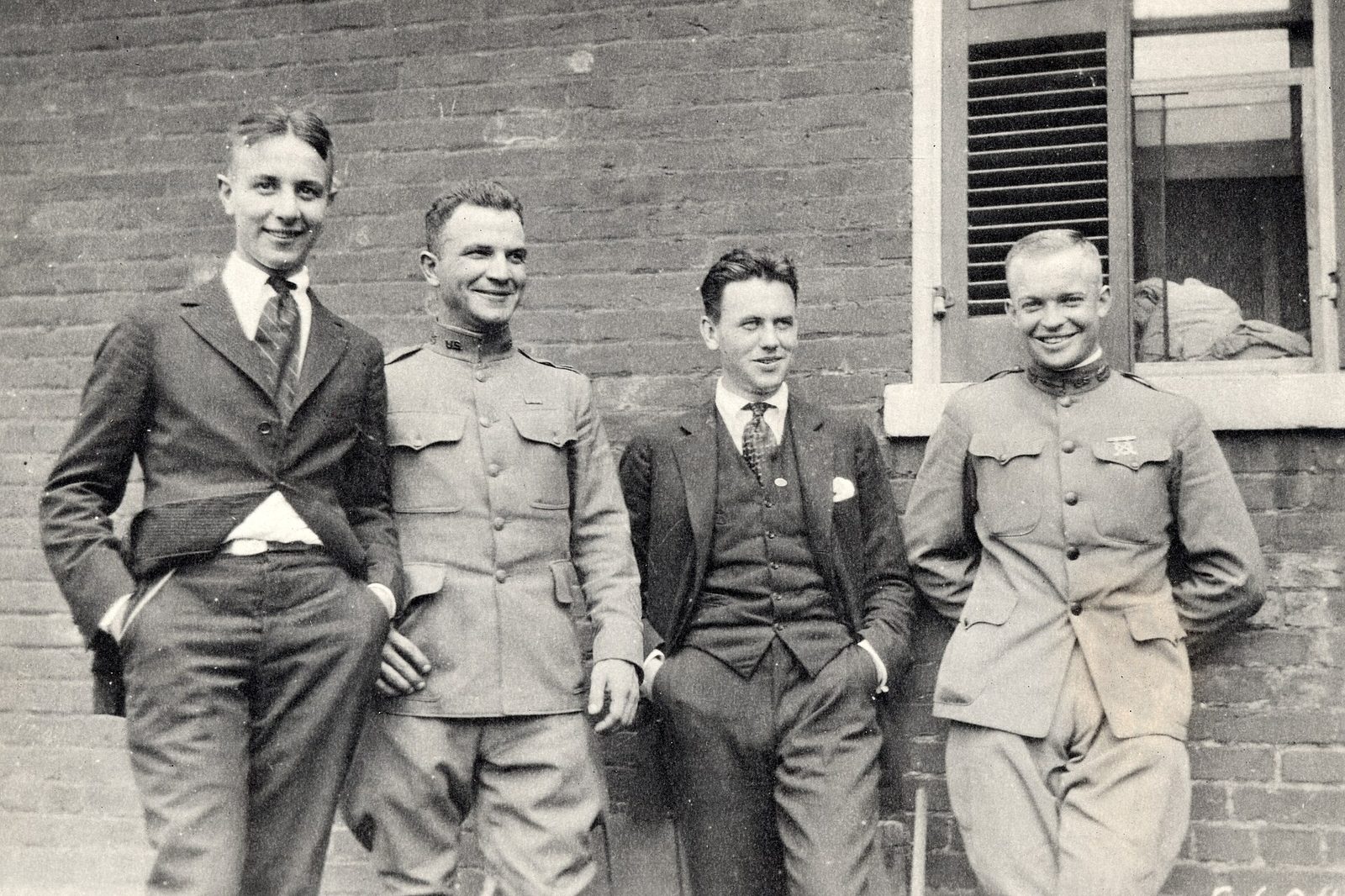
The story starts with that 1919 convoy. According to the Eisenhower Presidential Library, the Army's first transcontinental motor convoy included 81 motorized vehicles and covered 3,251 miles from Washington to San Francisco in 62 days. Lieutenant Colonel Eisenhower went along as an observer for the War Department and saw firsthand how bad the roads were, with vehicles breaking down on routes that were sometimes barely passable.
The FHWA's kid-friendly history of why Eisenhower understood the need for interstates adds a family detail: Eisenhower was missing his wife Mamie and their young son at the time and thought his Army career might be over. The convoy followed the Lincoln Highway, the most famous road of the day, between New York and San Francisco.
From an idea to a 41,000-mile plan
Eisenhower was not the first president to want better highways. The National Archives explains that President Franklin D. Roosevelt was interested in a network of superhighways in the 1930s, and the Federal-Aid Highway Act of 1944 authorized a 40,000-mile "National System of Interstate Highways." But when Eisenhower took office in January 1953, only 6,500 miles of improvements had been completed.
Eisenhower brought two experiences to the problem: the 1919 convoy, and what he saw of Germany's autobahn network during World War II. The National Archives says both shaped his view that good highways mattered for the economy and for national defense.
Safety was on his mind too. The FHWA's 70th anniversary history notes that in February 1954 he told a White House conference on highway safety that when an activity takes 38,000 American lives in one year, "it becomes a national problem of the first importance."
After several failed attempts in Congress, the Federal-Aid Highway Act of 1956 finally passed. The National Archives says it expanded the system to 41,000 miles and authorized $25 billion for construction over fiscal years 1957 through 1969. Eisenhower signed it on June 29, 1956.
How the money worked
The secret to the program was how it was paid for. According to the FHWA's Interstate System overview, the 1956 Act set the federal share of project costs at 90 percent and created the Highway Trust Fund, fed by federal gas taxes and other motor-vehicle user taxes. That meant the roads were built on a "pay-as-you-go" basis, one of Eisenhower's key requirements. In other words, every family that filled up the station wagon in the late 1950s helped pay for the next stretch of interstate.
The Act also called for uniform design standards nationwide. That is a big reason a road trip on the interstates feels familiar from state to state: similar lanes, ramps and interchanges, whether you are in Maine or Arizona.
The first shovels hit the ground
States moved fast. The FHWA's highway history for August 2, 1956 records that the Missouri State Highway Commission awarded a contract for 13.3 miles of US 66 (now I-44) in Laclede County, which the Bureau of Public Roads confirmed as the first Interstate contract under the new law. Missouri also awarded a contract to pave a 2.6-mile section of US 40 (now I-70) in St. Charles County, west of the Missouri River, which became the first project where actual construction started under the Act.
So if you ever drive I-70 west out of St. Louis, you are on one of the very first pieces of the system.
The last piece: Glenwood Canyon
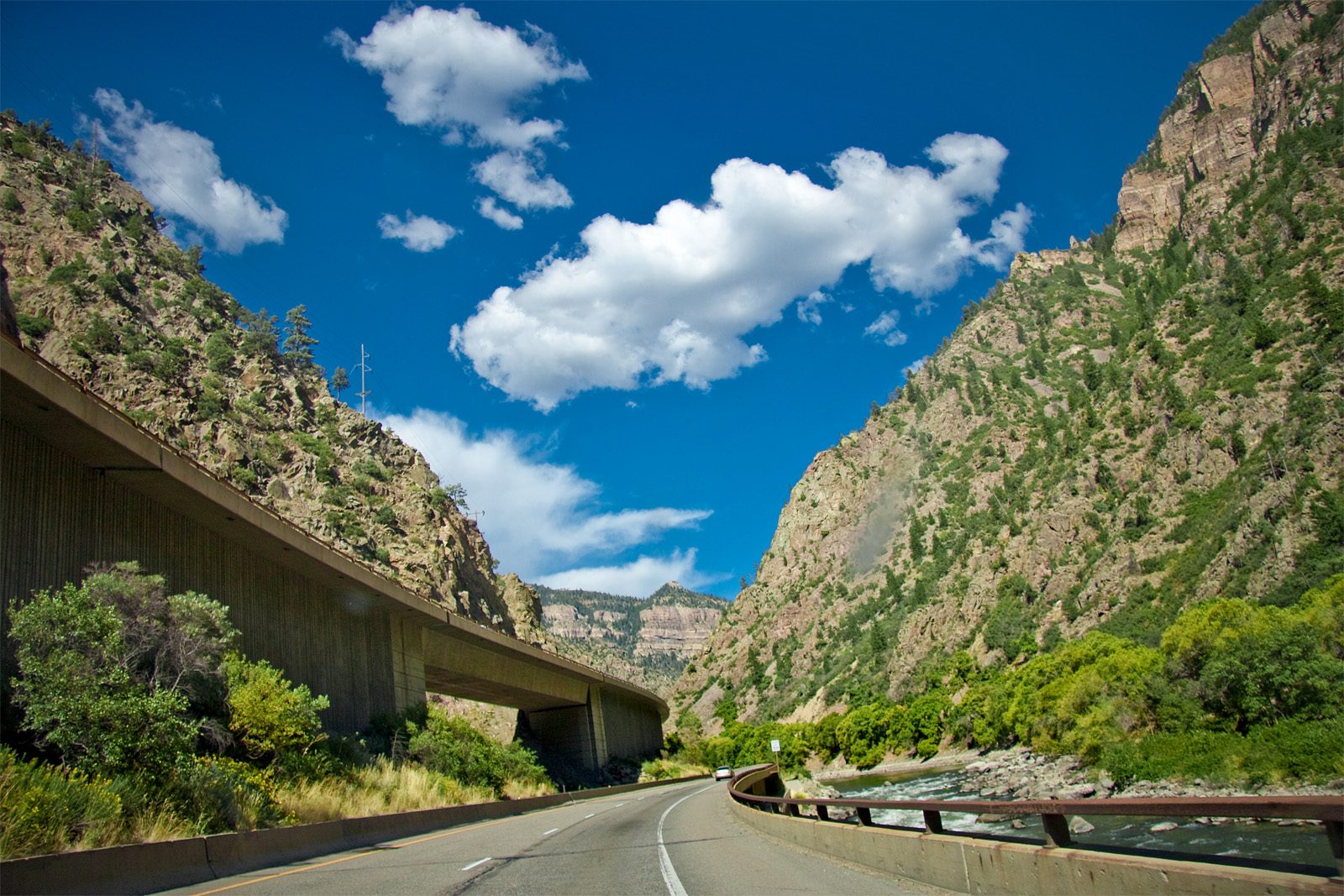
Building the system took decades. One of the hardest stretches was the 12.5-mile section of I-70 through Glenwood Canyon in western Colorado. The FHWA's highway history for October 14, 1992 records that its opening completed I-70 all the way from Baltimore, Maryland, to Cove Fort, Utah, and that the canyon section was built to minimize environmental damage in a gorge that already held the Colorado River, a railroad and US 6. The American Society of Civil Engineers' magazine wrote that the opening completed what may be America's greatest public works project.
The canyon is also one of the most beautiful interstate drives in the country. The road hangs on viaducts above the river, which is exactly what you see in the photo at the top of this page.
How the interstates created the family road trip
Before the interstates, a long family drive meant two-lane roads through every town, stoplights, slow trucks and the real chance of getting lost. The interstates changed that.
Faster, farther, easier
Limited-access highways with consistent standards meant families could cover far more ground in a day. Places that once needed a train ticket, like a national park several states away, became a summer vacation by car.
The family motel grew up alongside the highways
The roadside businesses followed. In 1951, a Memphis father named Kemmons Wilson took his family on a road trip and was frustrated by uncomfortable, overpriced motels. According to The Henry Ford museum, he especially disliked being charged extra for his children. He opened the first Holiday Inn in Memphis in 1952 with a simple promise: no extra charge for children. The museum says Wilson took risks buying property based on the plans for the new Interstate Highway System, and by the 1970s there were more than 1,400 Holiday Inns. The kids-stay-free idea that families still look for today grew up right alongside the interstates.
A trade-off worth knowing
The story is not all sunshine, and older kids deserve the full picture. The National Archives notes that in cities, the new superhighways cut through neighborhoods and destroyed housing, much of it in poorer areas, and that elsewhere they bypassed many small towns and local businesses. Route 66 is the most famous example: piece by piece, interstates replaced it, and the National Park Service says its last section was bypassed by I-40 in 1984. It is a good conversation for the car: what do we gain from faster roads, and what do we lose?
Five ways to celebrate the 70th with your kids
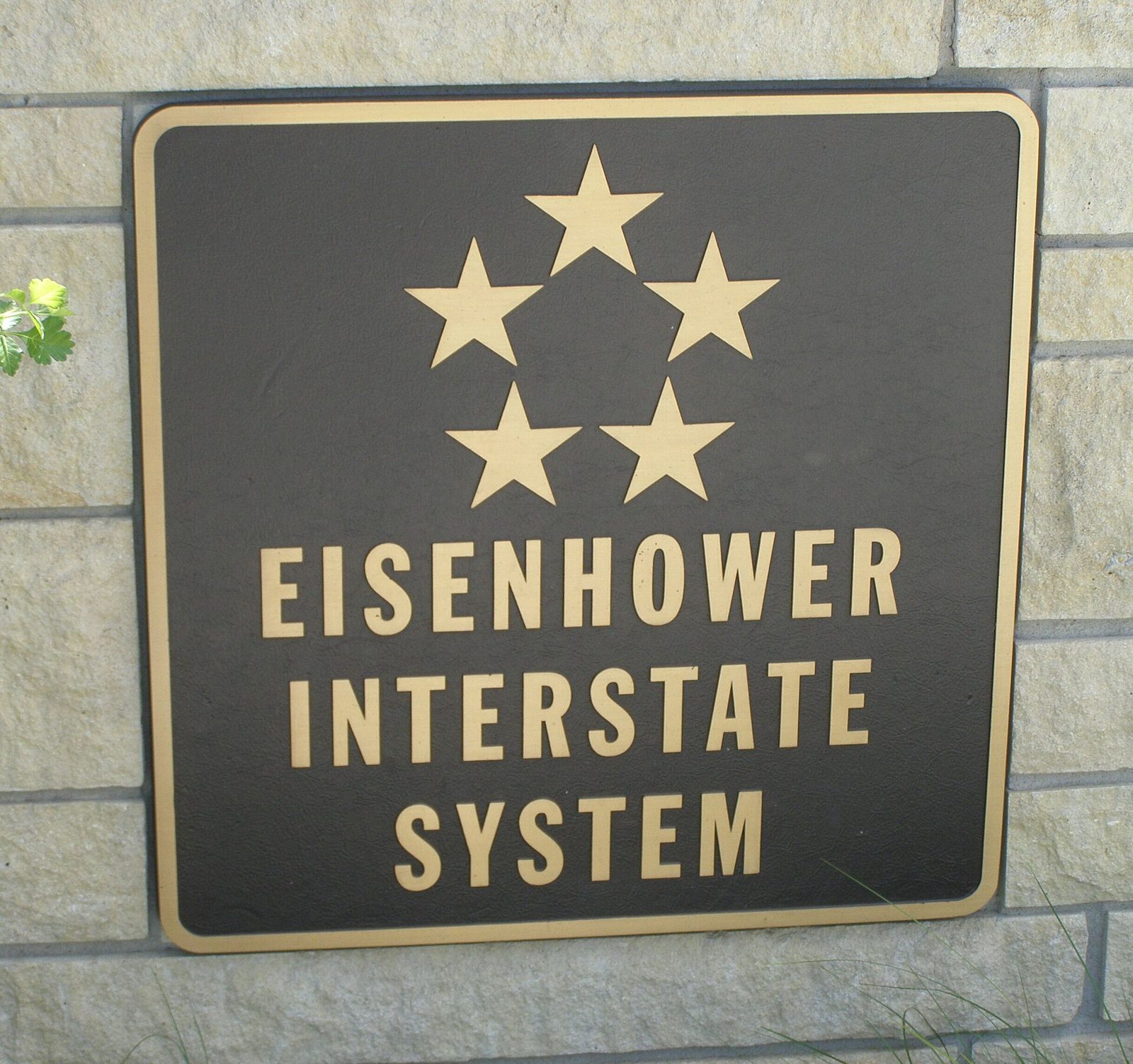
- Spot the Eisenhower sign. The system's full name is the Dwight D. Eisenhower National System of Interstate and Defense Highways, and the FHWA's 70th anniversary history says its standard sign, with five stars, was unveiled in 1993. Give a point to whoever spots one first.
- Trace the 1919 route. The convoy followed the Lincoln Highway west from Gettysburg, Pennsylvania, according to the FHWA's kid-friendly history. Find it on a map and see where it crosses the roads your family drives.
- Visit Abilene, Kansas. The Eisenhower Presidential Library is in Eisenhower's hometown of Abilene, Kansas, close to I-70, the same interstate that saw the first construction. Directions
- Compare old and new. Drive a stretch of old highway next to the interstate that replaced it, like a piece of Route 66 beside I-40 in Arizona, and talk about what changed.
- Do the 1919 math. The convoy took 62 days to cross the country. Ask the kids to estimate how long the same trip would take today by car, then check a map app.
Bring the road trip into 2026
Seventy years after Eisenhower's signature, the interstates are still how most American families get to the beach, the mountains and the relatives. The roads are the easy part now. The planning is where a little help goes a long way, and our family road trip survival guide covers the car kit, stops and snacks.
Vacation Hub builds a day-by-day road trip plan around your kids' ages and naps, with drive times and leave-by times for each leg, so everyone knows what is next. You can see how it works in our two-minute walkthrough. We are a small family business in Mesa, Arizona, and a real person answers every question: the owner, Johnathon Lawson, at [email protected].
Happy 70th, interstates. Thanks for the ride.
Keep planning
The Statue of Liberty Turns 140: A Homeschool Family Field Trip Plan
The Statue of Liberty turns 140 on October 28, 2026. A homeschool family field trip plan: the real story, crown and pedestal rules, Junior Ranger and Ellis Island.
Walt Disney World Turns 55: The 1971 Story and the Rides Your Kids Can Still Ride
Walt Disney World turned 55 on October 1, 2026. Here is the 1971 story, the opening-day rides kids can still ride, and what is closed this fall.
Thanksgiving on a Budget for Big Families: Fly, Drive or Stay Put in 2026?
A Thanksgiving budget for big families in 2026: real airfare, gas and bag-fee numbers, fly-vs-drive math for a family of six, and where large families save most.