Carry-On Only With a Family of Five: One Bag Each, Zero Baggage Claim
How a family of five can travel carry-on only: one bag per person, what kids can carry, a laundry plan, TSA 3-1-1 liquids and basic economy traps.
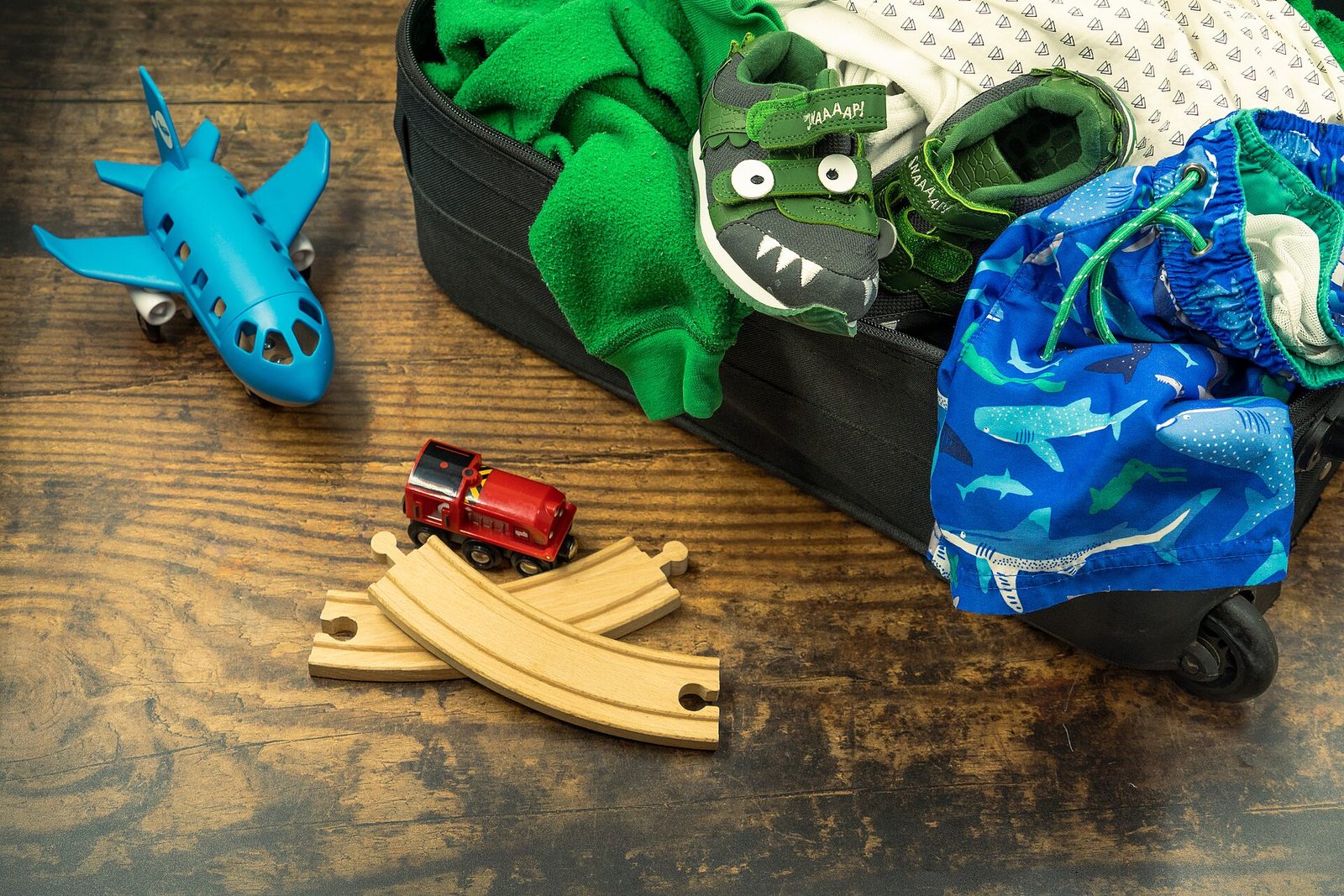
Five people, five bags, and nobody standing at a baggage carousel at 11 p.m. with a sleeping toddler draped over one shoulder. That is the promise of carry-on-only family travel, and it is more doable than it sounds. It is not about owning less or suffering more. It is about a few rules, a laundry plan, and letting every kid carry something that matters to them.
There is also a money angle. Checked bags add up quickly for a big family: Delta lists its first standard checked bag on domestic trips at $45 each way (as of October 2026), and United says bag fees for tickets bought on or after April 3, 2026 start at $45 if you prepay. Five travelers each checking one bag on a round trip can mean ten bag fees before you've bought a single snack.
The core rule: one bag per person, plus one personal item
Most major US airlines give each ticketed passenger one carry-on bag and one personal item. As of October 2026, the size limits on three big carriers look like this:
| Airline | Carry-on (max) | Personal item (max) |
|---|---|---|
| American | 22 x 14 x 9 in, including handles and wheels | 18 x 14 x 8 in |
| Delta | 22 x 14 x 9 in (45 linear inches) | Must fit under the seat ahead of you |
| United | 9 x 14 x 22 in, including handle and wheels | 9 x 10 x 17 in |
A child with their own seat gets the same allowance as an adult. With five seats you have up to ten pieces, which is plenty of room. The trick is deciding which bags carry what.
A setup that works for many families:
- Each parent: one 22-inch roller (or a carry-on-size travel backpack) plus a personal-item backpack.
- Each older kid (roughly 7 and up): a small roller or backpack they handle themselves.
- The youngest: a small backpack with their own comfort items. Their full-size carry-on allowance goes to a "shared" bag that a parent wheels.
That shared bag is your secret weapon. It holds the family toiletries, the laundry kit, swimsuits and the extra layers, so no single suitcase has to hold "everything just in case."
The baby and toddler bonus
Airlines generally don't count certain child gear against your allowance. United lists a car seat, child safety harness or stroller, and a diaper bag and breast pump as items you can bring for free. American says diaper bags (one per child), a breast pump, a small soft-sided cooler of breast milk, and child safety seats and strollers don't count as your personal item or carry-on. Delta lists strollers and child safety seats as free extras beyond the standard allowance. If you have a baby, that diaper bag really is extra space. Pack it like a real bag, not an afterthought.
The basic economy catch
This is where carry-on-only plans fall apart, so check your fare before you pack.
As of October 2026, United's own carry-on page says Basic Economy travelers can bring only one personal item on most trips, with no full-size carry-on unless you're flying to South America, across the Atlantic or across the Pacific. There are exceptions for MileagePlus Premier members, people traveling with them, and primary holders of some United credit cards. If you show up at the gate with a roller on a Basic Economy ticket, it has to be checked and you'll pay.
Delta's carry-on page, by contrast, lists the same one carry-on plus one personal item for passengers and doesn't carve out an exception for its basic fare. But it does note that on Delta Connection flights with 50 or fewer seats, only personal items go on board and bigger bags are gate-checked. American likewise says its regional American Eagle planes have limited bin space and bigger carry-ons are valet-checked at the gate for free.
What this means for parents:
- Compare the real price. A Basic Economy fare that forces five checked bags can cost more than a standard economy fare.
- Check the aircraft. If one leg is on a small regional jet, plan for the rollers to be gate-checked and keep the essentials in personal items.
- Pack every personal item as if the big bag might disappear for a few hours. United specifically advises keeping medication, keys and other essentials in your personal item in case your carry-on is gate-checked.
What kids can actually carry
Kids love having their own bag, and a bag they carry is a bag you don't. But be realistic about weight. The American Academy of Pediatrics advises that a backpack shouldn't weigh more than 15% of a child's body weight, and it recommends using both shoulder straps. Their example is a 100-pound child carrying no more than 15 pounds; by the same math, a 45-pound child should carry under 7 pounds. That is a light backpack: a water bottle, a sweatshirt, a book, a tablet and headphones, and a snack. It is not a week of clothes.
Older kids, around 8 to 12, can usually wheel a small roller with most of their clothes. Practice at home: have them pack it, zip it, and pull it around the block. If they can't lift it into the car trunk, they won't lift it into an overhead bin.
Capsule wardrobes: the math that makes it work
The secret to carry-on only isn't fancy packing cubes. It's packing fewer clothes that all go together.
A simple capsule for a 7-to-10-day trip, per person:
- Tops: 4 to 5 that all match the bottoms
- Bottoms: 2 to 3 (one pair of jeans or long pants, the rest lighter)
- One warm layer: a fleece or hoodie
- One outer layer: a packable rain jacket
- Underwear and socks: 5 to 6 pairs
- Sleepwear: 1 set
- Shoes: wear the bulkiest pair, pack at most one more
- Swimsuit if there's any chance of water
Pick two base colors for each person (navy and gray, or khaki and blue) so every top works with every bottom. Wear the bulky items on travel day: jeans, sneakers, the hoodie, the jacket.
The laundry plan
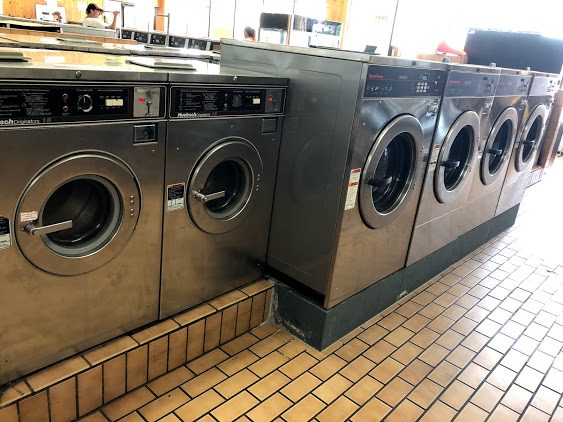
Packing for five to six days and washing once is what turns a carry-on into a two-week bag. Plan it before you go, not on day six when everyone is out of socks.
- Book at least one stay with a washer. A vacation rental or a hotel with guest laundry halfway through the trip is ideal. Check the listing for the actual machine, not just "laundry nearby."
- Know your backup. Find the nearest laundromat to your lodging before you leave.
- Pack a small laundry kit in the shared bag: a few detergent sheets or pods, a mesh bag for dirty clothes, and a couple of clothespins.
- Do a sink wash for the small stuff. Underwear, socks and swimsuits wash fast in a hotel sink and usually dry overnight.
Liquids: TSA 3-1-1 for five people
Here's where a family of five has a quiet advantage: everyone gets their own liquids bag. TSA's rule for carry-ons is containers of 3.4 ounces (100 milliliters) or less, all fitting in one quart-sized bag. Five travelers means up to five quart bags, which is a lot of sunscreen and shampoo if you split it smartly.
Tips for splitting:
- Assign categories. One bag for sunscreen, one for hair products, one for face and body, one for kids' items, one for "extras."
- Buy refillable travel bottles and fill them only as much as you'll need.
- Use solids where you can. Bar soap, shampoo bars and stick sunscreen don't count as liquids.
Some items are exempt from 3-1-1, and these matter most for families. TSA says formula, breast milk and juice for children are allowed in carry-ons in quantities over 3.4 ounces and don't need to fit in the quart bag; ice packs and gel packs used to cool them are allowed too. Medically necessary liquids, medications and creams over 3.4 ounces are also allowed, but TSA asks you to tell the officer at the start of screening and take them out to be screened separately. Pack them where you can reach them fast.
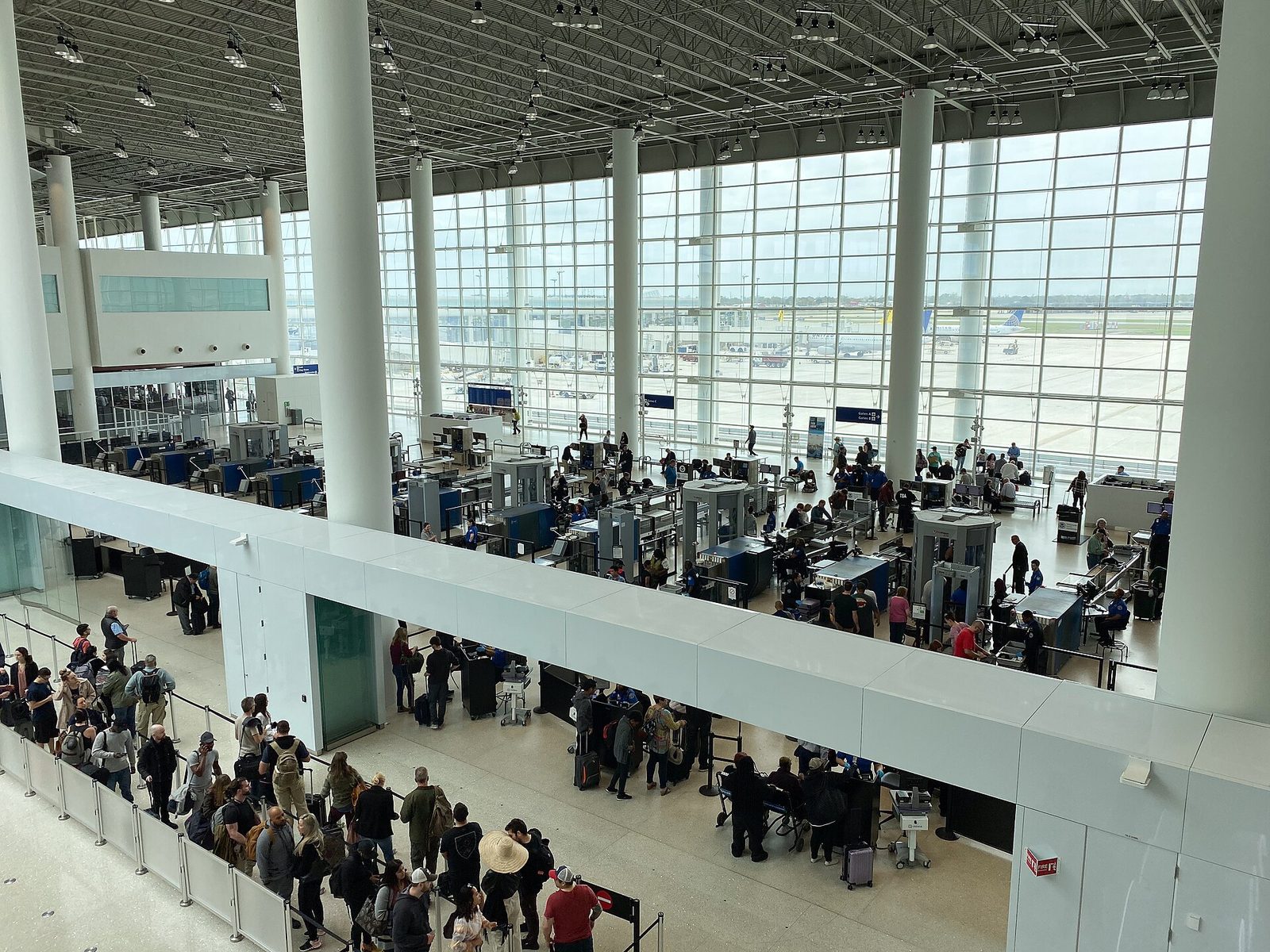
Security is also a little easier than it used to be. DHS announced on July 8, 2025 that passengers at domestic airports can keep their shoes on through screening, and TSA's family page says children who appear to be 12 and under can leave on shoes, light jackets and headwear. Officers can still ask for more screening when needed.
Personal item vs. carry-on: what goes where
Think of the overhead-bin bag as the closet and the under-seat bag as the nightstand.
Carry-on (the closet): clothes, shoes, liquids bag, laundry kit, swimsuits, chargers you won't need in flight.
Personal item (the nightstand): anything you'd be upset to lose for a few hours if the bag got gate-checked, plus anything you'll want in the air.
- Medications and the family health kit basics
- IDs, passports and any printed confirmations
- Phone, chargers and a power bank (American notes that batteries and e-cigarettes can't go in checked bags, so pull them out if your roller gets checked at the gate)
- A spare shirt for each little kid and a spare for you (spills happen)
- Snacks, wipes and a small trash bag
- Headphones and entertainment
What to buy when you get there
Carry-on only gets much easier once you accept that most destinations have stores. Things that are often smarter to buy on arrival:
- Full-size sunscreen and bug spray, especially for a beach or lake week
- Diapers and wipes beyond the first day or two
- Snacks and breakfast foods for the rental
- Bulky beach gear like sand toys or a cheap umbrella, which you can donate or leave behind
- Laundry detergent if your rental doesn't provide it
If you're juggling several flights, lodging with and without washers, and five people's lists, it helps to keep it all in one place; a family planner like Vacation Hub can hold the itinerary and packing lists together so nothing lives only in one parent's head.
The first carry-on-only trip feels like a leap. By the second, you'll wonder why you ever waited at a carousel.
Keep planning

First Snow Trip With Kids: The Packing List for Families Who Live Where It Never Snows
First snow trip with kids? A packing list for warm-climate families: three layers, mittens, what to rent or borrow, the car kit and the sunscreen nobody expects.
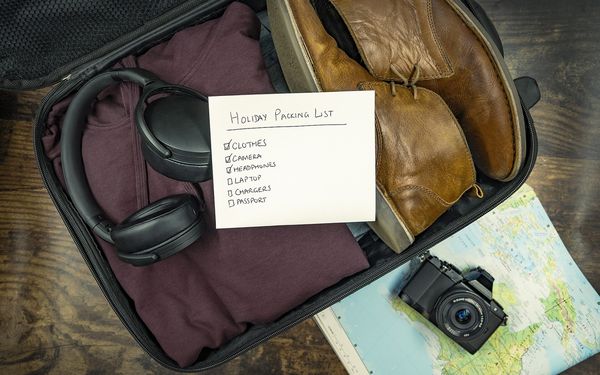
The Family Vacation Packing Checklist (Printable, Person by Person)
A printable family vacation packing checklist for parents, kids and babies, plus documents, health kit, tech, and car, plane, beach and cold-weather add-ons.
Thanksgiving on a Budget for Big Families: Fly, Drive or Stay Put in 2026?
A Thanksgiving budget for big families in 2026: real airfare, gas and bag-fee numbers, fly-vs-drive math for a family of six, and where large families save most.