Your Kid's First Flight: How to Prepare a First-Time Flyer Before Thanksgiving
Your kid's first flight, step by step: practice at home, what TSA does with children, ear-popping fixes, the best seat and a checklist before Thanksgiving.
The very first airline passenger was a first-time flyer too.
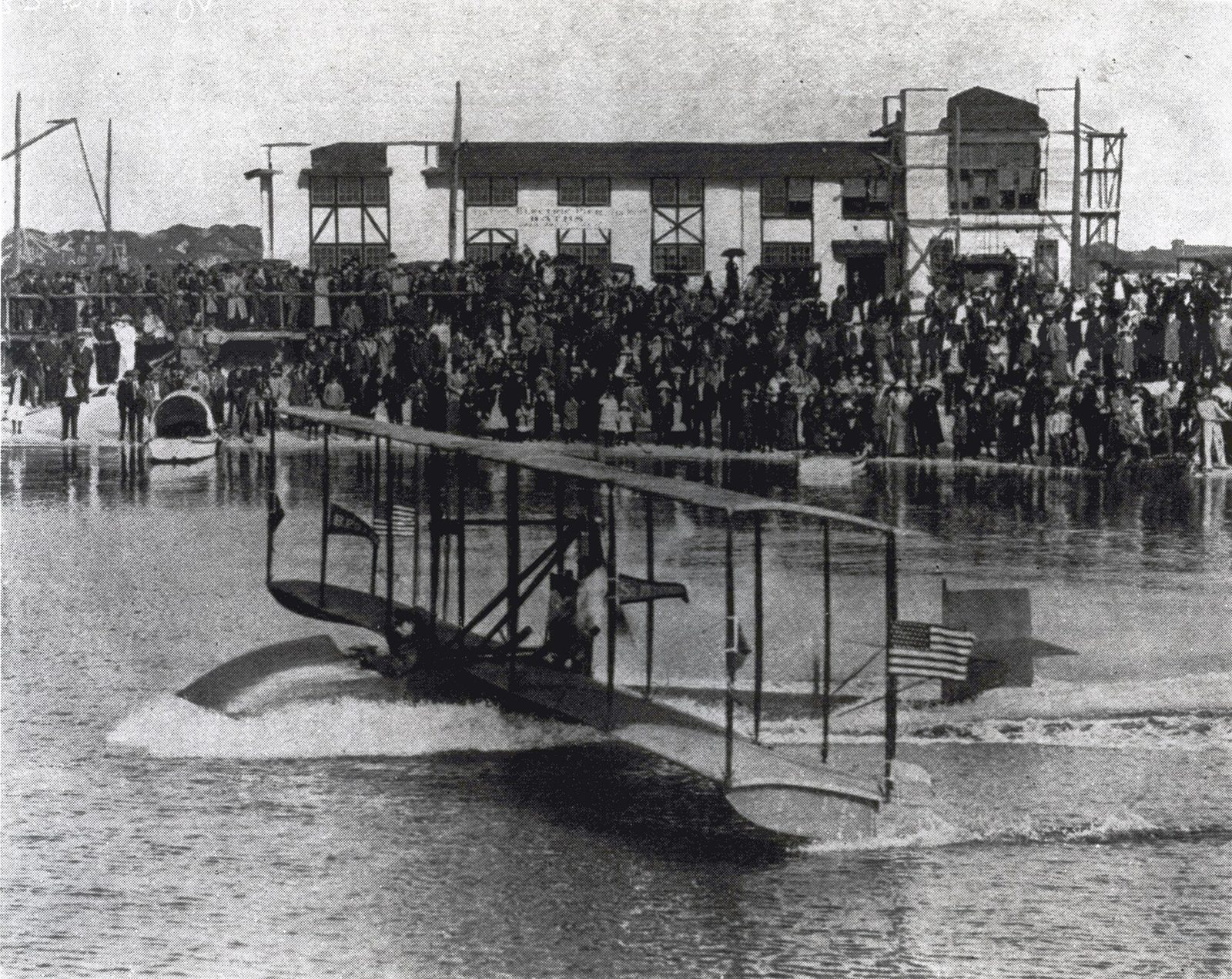
On January 1, 1914, a small flying boat lifted off the water in St. Petersburg, Florida, and crossed Tampa Bay. The Smithsonian's National Air and Space Museum says the trip covered 18 miles and took 23 minutes, 11 hours less than the same journey by rail. The plane carried exactly one passenger, who sat next to the pilot in an open cockpit. Former mayor A. C. Phiel paid $400 for the honor of being first.
Your child's first flight will be warmer, quieter and a great deal cheaper per mile. But the feeling is the same one that crowd on the pier had in 1914: this is new, it is loud, and nobody is quite sure what happens next.
That is the whole secret of a good first flight. Kids are rarely scared of flying itself. They are unsettled by surprises. With Thanksgiving on November 26, 2026, about six and a half weeks away, you have plenty of time to take the surprises out.
Start two weeks out: tell the story of the day
The FAA puts it plainly on its Kids' Corner page: taking a big trip on an airplane for the first time can be exciting and scary for little ones. Its answer is simple: help children know what to expect before it happens.
Walk through the day in order, the way you would read a picture book:
- We drive to the airport and roll our bags inside.
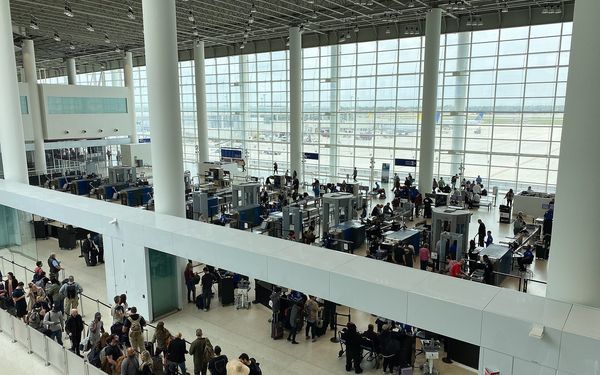
- We wait in a line. Our bags ride through a machine on a belt, and we walk through a doorway that beeps sometimes.
- We find our gate and watch planes out the big windows.
- We walk down a hallway onto the plane and find our seats.
- We buckle up. The engines get loud, we go fast, and then we are up.
- Our ears might feel funny. We have a trick for that.
- We have snacks, a show and a look out the window.
- We land with a bump, and Grandma is waiting.
Tell it a few times in the two weeks before the trip. By the third telling, most kids start correcting you, which is exactly what you want.
Use the FAA's free kid videos
The FAA has a cartoon cloud named Cloudy who explains what happens at the airport and on the plane, plus a short Turbulence Explained for Kids video. Both are on the Kids' Corner page. They are short, free and made by the people who run the sky, which impresses a seven-year-old more than you might expect.
Play airplane at home
Line up two kitchen chairs. Buckle a belt across a lap. Practice three things:
- Seat belt on while seated. Make it a game: who can stay buckled through a whole episode?
- Inside voice and feet down. The seat in front of you is somebody's back.
- Headphones on. If your child has never worn headphones for more than a minute, the plane is a bad place to find that out.
The security line, minus the mystery
Security is the part first-time flyers (and their parents) worry about most. The rules for kids are gentler than many families expect. All of these come from the TSA's Traveling with Children page, as of October 2026:
- Children who appear to be 12 and under can leave their shoes, light jackets and headwear on during screening.
- A child who can walk through the metal detector alone may do so separately from a parent, and little ones may be carried through.
- Children will not be separated from their parent or guardian.
- Strollers, car seats, booster seats and backpacks all go through the X-ray.
That includes the stuffed animal. Warn your child ahead of time that Bunny takes a short ride through the tunnel and comes out the other side. A surprise goodbye at the belt is one of the classic first-flight meltdowns, and it is completely avoidable.
A few more things that calm parents down:
| Question | Answer (as of October 2026) |
|---|---|
| Does my child need ID? | The TSA does not require ID for children under 18 on flights within the United States. Your airline may have its own rules, so check. |
| Can my kids use my PreCheck? | Kids 12 and under can join a PreCheck parent automatically; teens 13 to 17 need the indicator on their own boarding pass, per the TSA's PreCheck for Families page. |
| Is there a family lane? | The TSA lists 13 airports with "Families on the Fly" lanes for parents with children 12 and under, including Orlando, Tampa, Salt Lake City, Seattle-Tacoma, Honolulu and Orange County. Phoenix is not on the list yet. |
| What if my child needs extra help? | Call TSA Cares at (855) 787-2227 at least 72 hours before the flight. |
For the adult side of the checkpoint, including REAL ID and liquids, see our TSA and REAL ID rules for families.
Pick a first flight that is easy to love
You cannot control the weather, but you can stack the deck when you book.
- Go nonstop if you can. One takeoff and one landing is plenty for a first try. A connection doubles the ear-popping and adds a sprint through a second airport.
- Fly when your child is usually at their best. For most young kids that is the morning. A tired child handles new things badly.
- Give them the window. Watching the ground shrink is the best free entertainment on the plane. The American Academy of Pediatrics also suggests a window seat for little ones, because the aisle has more hazards.
- Make sure you actually sit together. The Department of Transportation's family seating dashboard shows that Alaska, American, Frontier, Hawaiian and JetBlue guarantee a child 13 or under a seat next to an accompanying adult at no extra cost, with conditions (dashboard last updated September 2025). On other airlines, read our guide to sitting together without paying extra.
If your first-time flyer is under two, the plan is different. Our baby and toddler flying playbook covers car seats and lap infants.
The ear trick
Ears are the one part of flying that can really hurt, so give your child a job to do.
Mayo Clinic explains that "airplane ear" happens when the air pressure changes quickly as a plane climbs or comes down, and that swallowing or yawning opens the small tube that evens the pressure out. Its tips for children:
- Children older than 4 can chew gum, or drink or blow bubbles through a straw, during takeoff and landing.
- Babies and toddlers can suck on a bottle or pacifier, sitting up.
- Stay awake for takeoff and landing so the swallowing can happen.
- Mayo Clinic says decongestants are not recommended for young children.
Tell your child ahead of time: "Your ears might feel full, like in a swimming pool. When that happens, you take a big sip and a big yawn." Pack a cup with a straw and buy the drink after security.
Mayo Clinic also lists a cold, a sinus infection or an ear infection as things that raise the risk. If your child is sick or has had recent ear trouble, call your pediatrician before the trip.
Bumps, noises and the seat belt rule
Planes make strange sounds: a thunk under the floor when the wheels fold away, a whir from the wing, a ding from the ceiling. Name them before they happen. "That thunk is the wheels tucking in" turns a scare into a fun fact.
Then there is turbulence. The FAA's turbulence page says it is normal and happens often, and that it can show up even when the sky looks clear. The first thing on the FAA's list for preventing injuries is simple: keep your seat belt buckled at all times while seated.
For a child, try this: "Sometimes the air is bumpy, like a gravel road. The plane is built for it. Our job is to keep our belts on."
One honest limit: you cannot promise a smooth ride, so do not. Promise the things you control. You will be in the next seat, the belt stays on, and there are snacks.
The first-flight carry-on
Let your child pack and carry their own small backpack. Owning the bag is half the fun.
- Headphones that fit, already practiced with at home
- A tablet or player with shows downloaded (do not count on Wi-Fi)
- One new small surprise, saved for the middle of the flight
- Crayons or stickers and a little notebook
- An empty water bottle or cup with a straw to fill after security
- Gum for kids over 4, or a pacifier for the littlest
- Snacks they already like
- A full change of clothes in a zip bag, and a sweatshirt
- The stuffed animal, briefed on its X-ray ride
If you need headphones or a bag before the trip, look through our own store, AZ Sun Valley Sales, first. For the rest of the family's bags, our carry-on only guide keeps everyone out of baggage claim.
Make it a milestone
A first flight only happens once. Mark it.
- Take a photo at the gate with the plane in the window behind them.
- Let them hand over their own boarding pass.
- Keep the paper boarding pass for the scrapbook.
- At a quiet moment, such as while everyone is getting off, ask a flight attendant if your child can say hello to the pilots. It is always the crew's call, and a no is nothing personal.
If your first flight is the Thanksgiving one, our Thanksgiving travel 2026 guide covers the busiest days and when to leave for the airport.
From 23 minutes to anywhere
That first airline in 1914 flew one passenger at a time, 18 miles across a bay. Your child gets a window, a snack and a sky full of clouds. Tell them the story of the day, practice the belt and the ear trick, and let them carry their own bag.
When the trip itself needs organizing, Vacation Hub keeps your flight confirmations and reservations in one place, builds a packing list for every person and shows a welcome countdown the kids can watch tick down; here is our Thanksgiving trip Short to see it. We are a small family business in Mesa, Arizona, with real-person support from the owner, Johnathon Lawson: [email protected].
Have a wonderful first flight. Save the boarding pass.
Keep planning
Thanksgiving Travel 2026 With Kids: The Busiest Days, When to Leave and Airport Tips
Thanksgiving travel 2026 with kids: the busiest days to fly and drive, the best times to leave, when to book flights and TSA tips for families with pies.

Flying With Holiday Gifts: TSA Rules, Shipping Ahead and Checked-Bag Tips
Flying with holiday gifts this year? TSA rules on wrapped presents, snow globes and food, the 2026 USPS shipping dates, and when to ship, pack or check gifts.
TSA and REAL ID Rules for Families in 2026: What Parents Need to Know
TSA and REAL ID rules for families in 2026: do kids need ID, the $45 ConfirmID fee, 3-1-1 liquids and formula, shoes-on screening, PreCheck with kids.