Road Trip With Kids and a Dog: The Family Plan for Fall and the Holidays
A road trip with kids and a dog, planned for the holidays: hot-car facts, a safe back-seat setup, state pet rules, national park dog rules and a two-hour stop rhythm.
In late September 1960, John Steinbeck loaded a camper truck he named Rocinante, after Don Quixote's horse, and set off from New York to see the country again. His co-pilot was Charley, a French poodle. They drove more than 10,000 miles in nearly three months, and the book that came out of it, Travels with Charley, is still one of the best-loved American road trip stories (Center for Steinbeck Studies, San José State University).
Steinbeck had one passenger to keep happy. You might have three kids, a cooler, a pile of pillows and a dog who has opinions about all of it.
This is a good month to plan it. Route 66 turns 100 on November 11 (we wrote a centennial road trip plan), Thanksgiving is November 26, and winter break is right behind it. A lot of families will drive instead of fly this season, and many of them are bringing the dog because boarding is booked, expensive, or just not how your family does things.
Here is the plan that keeps kids, dog and driver safe and sane.
First question: should the dog come at all?
The American Veterinary Medical Association asks owners to start here. Its pet safety in vehicles guide says to ask yourself whether you really need to take your pet, and if not, to leave them safely at home.
Bringing the dog usually makes sense when:
- You are driving to family who welcome dogs (ask first, and ask about their own pets).
- Your rental or hotel takes dogs, and you have read the pet rules and fees on its own site.
- Your dog is calm in the car for an hour or more.
- Most of what you plan to do allows dogs, or one adult is happy to stay back with the dog for part of the day.
It usually does not make sense when the trip is built around places dogs cannot go: theme parks, museums, most restaurants inside, or a national park day spent on shuttle buses. If that describes most of your days, a pet sitter or boarding at home is kinder to the dog and to you.
Rule 1: the dog never stays alone in a parked car
This is the one rule with no exceptions, and it matters even in fall.
The AVMA says research on vehicle safety for children shows the temperature inside a car can rise about 20°F in 10 minutes and almost 30°F in 20 minutes. After an hour it can be more than 40°F hotter inside than outside, and the AVMA points out that even on a 70-degree day that means more than 110°F in the car. It also says plainly that cracking the windows makes no difference, and that cold cars are dangerous too, especially for young, old, ill or thin pets (AVMA).
What this means for a family road trip:
- Every stop is a team stop. One adult takes the kids into the restroom while the other walks the dog. Then swap.
- Solo parent with a dog? Pick stops where you can take everyone in together, or use drive-through food and eat at a picnic table. Our solo parent road trip plan has more on doing stops alone.
- Plan meals around the dog. A picnic lunch at a rest area or park beats a sit-down restaurant where the dog would have to wait in the car.
Rule 2: the dog rides restrained, away from the kids' laps
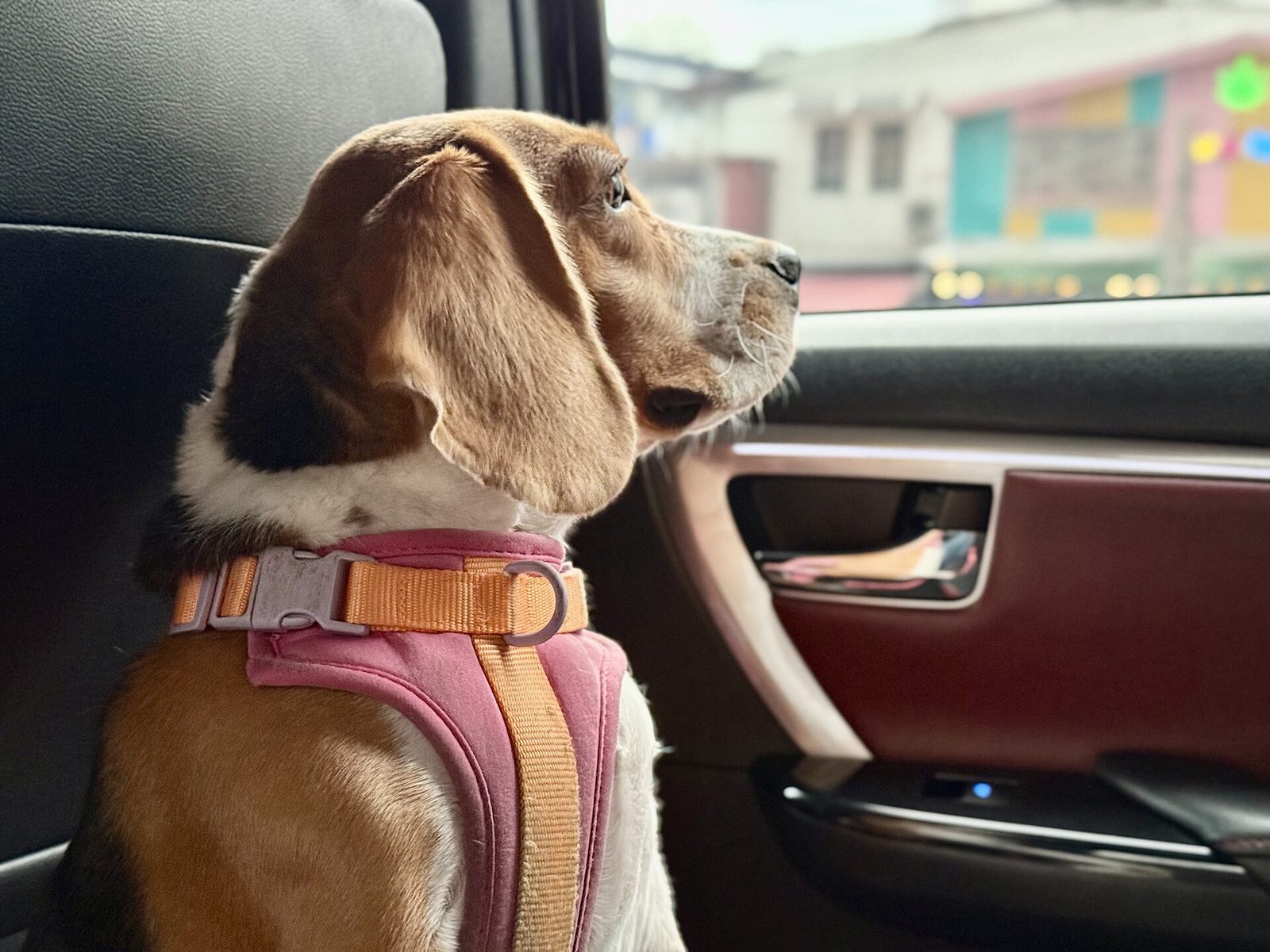
A loose dog is a projectile in a hard stop, and a distraction the rest of the time. The AVMA lists the risks of unrestrained pets: a small dog can slip into the footwell and get under the pedals, a big dog leaning across the driver blocks the view, and in a collision a loose pet can be crushed by an airbag or thrown through a window. It also warns against letting a dog ride with its head out the window, and against riding loose in a pickup bed, which it notes is illegal in many states (AVMA).
The AVMA's advice on the setup:
- Use a car harness, crate or carrier. A car harness is not the same as a walking harness. The AVMA says to look for crash-tested harnesses that work with the vehicle's seat belt and keep the dog sitting upright.
- Size the crate right. The dog should be able to stand, turn around and lie down comfortably.
- Put the crate as close to the center of the vehicle as you can and strap it down so it cannot slide.
For families, add two rules of our own:
- No dog on a child's lap, ever, even "just for a minute." Kids stay in their car seats and boosters; the dog stays in its spot.
- Seat the dog away from the snack zone. Crumbs on the floor are an invitation, and a lot of kid snacks are not dog food (more on that below).
If your car is already full of booster seats, a back-seat style travel crate or a folding car ramp for an older dog can make the setup easier; our family store in Mesa often has pet travel gear in stock, like this inflatable back-seat dog travel crate.
Rule 3: know the rules where you are going
State lines
The USDA's Animal and Plant Health Inspection Service says it does not regulate pet owners moving their own pets between states. Instead, the destination state sets the rules, which can include a health certificate, updated vaccinations, testing or treatments. APHIS keeps a state-by-state list and suggests calling your vet as soon as you know your travel details. As of October 2026, look up every state you will sleep in, and carry the rabies certificate either way.
Hotels and rentals
Pet policies, fees and weight limits change from property to property, even within one hotel brand. Read the pet policy on the hotel's or rental's own listing, and send a quick message to confirm before you book. Ask whether dogs can be left in the room alone (many places say no), so you know whether dinner out is even an option.
National parks: the B.A.R.K. rules
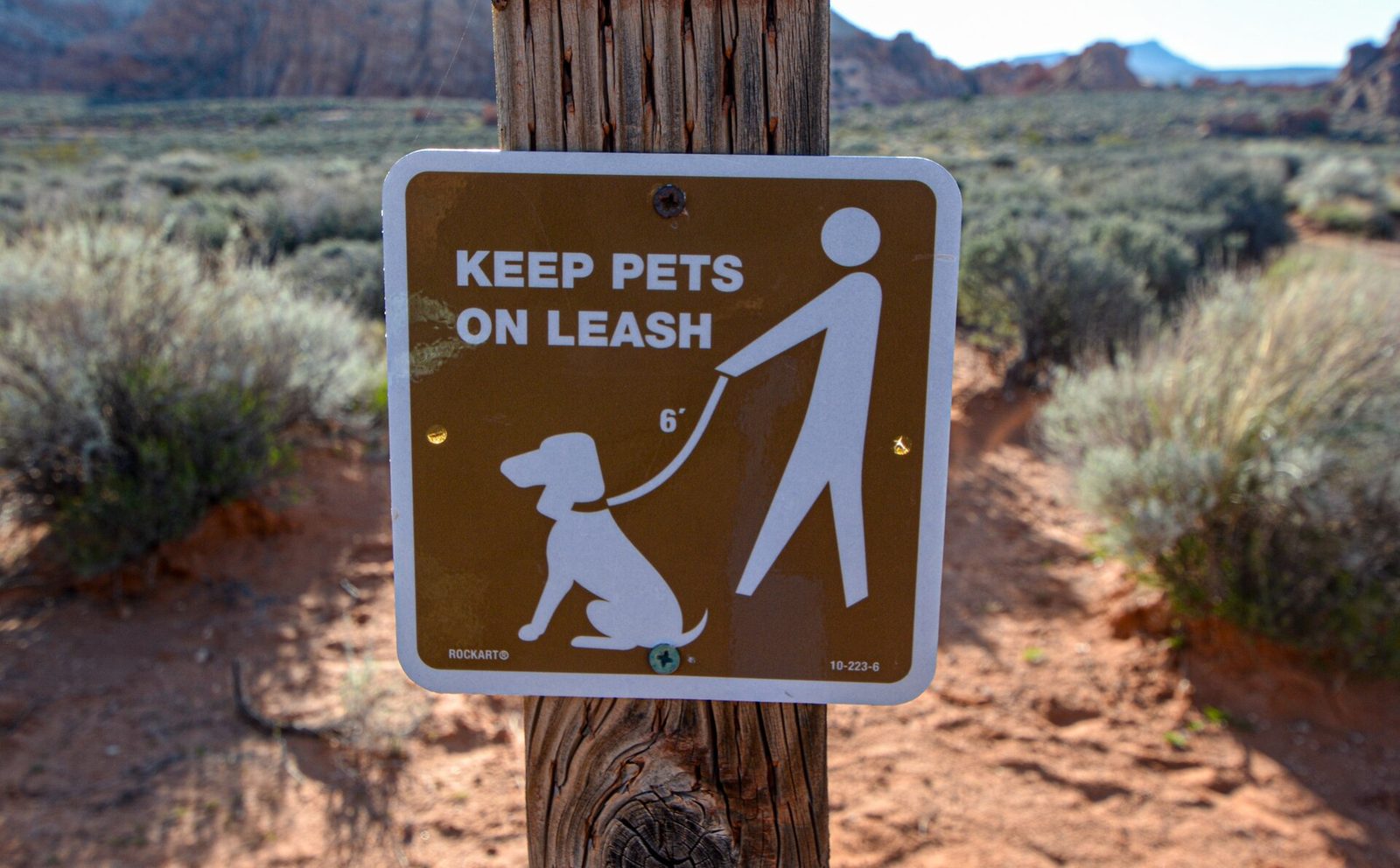
Many national park sites welcome leashed dogs in some places, and the Park Service sums up its pet rules as B.A.R.K.: Bag your pet's waste, Always leash your pet, Respect wildlife, and Know where you can go. Each park runs its own B.A.R.K. Ranger program, from ranger walks to a pledge or an honor system (NPS). Kids love this: the dog earns a "ranger" badge right alongside their Junior Ranger badges.
"Know where you can go" is the part that trips families up. Two examples on the Route 66 corridor:
| Park | Where leashed dogs can go | Where they cannot |
|---|---|---|
| Grand Canyon (South Rim) | Trails above the rim, Mather Campground and developed areas, leash up to 6 feet | Below the rim, and on park shuttle buses. A kennel near Maswik Lodge boards dogs and cats (proof of vaccines required, reservations recommended) |
| Petrified Forest | Any paved road or trail and the designated wilderness, leash 6 feet or less; fenced dog park by the Painted Desert Visitor Center | Inside park buildings (service animals only) |
Petrified Forest is a fun one for dog families in the centennial year: the Park Service has called it the only national park with a section of historic Route 66 inside its boundaries (NPS), and you can ask for a Bark Ranger card at any entrance booth or visitor center. If you are heading to the big canyon, our Grand Canyon with kids in fall and winter guide covers the rest of the trip.
The two-hour rhythm: stops that work for kids and dogs
Kids and dogs need roughly the same things: a bathroom, water, a snack and a few minutes to run. Plan stops for both at once and you will stop less often overall.
- Stop about every two hours, sooner with toddlers or a puppy.
- Look for rest areas with pet areas. Many state rest areas have a marked pet walk or even a fenced dog run. Walk the dog there, never on the grass where kids play.
- Leash on before the door opens. A dog that bolts across a parking lot is the scariest moment of most dog road trips. Clip the leash in the car, then open the door. Give one child the job of "door captain" who waits for the leash click.
- Water first, then the walk. Offer water at every stop, even if the dog does not seem thirsty.
Our family road trip survival guide has the full car kit and stop plan for the humans.
Holiday food: what to keep away from the dog
Thanksgiving and holiday road trips come with treats, and a dog in a car full of kids will find every dropped one. The ASPCA's list of people foods to avoid feeding pets includes chocolate, grapes and raisins, and xylitol, a sweetener found in some gum, candy and baked goods. Keep those, and the table scraps, in a closed bag or cooler out of the dog's reach. If something goes wrong, call your vet or the ASPCA Animal Poison Control Center at (888) 426-4435. It answers 24 hours a day, 365 days a year; the ASPCA says a consultation fee may apply. Save that number in your phone before you leave, along with a vet near your destination.
The dog's packing list
- Leash, plus a spare
- Collar with ID tag and your cell number; microchip details up to date
- Car harness, crate or carrier
- Food for every day plus two extra, in a sealed container
- Water bottle and a collapsible bowl
- Poop bags (more than you think)
- Rabies certificate and vaccine records (paper or phone photo)
- Any medicines, in the original packaging
- The dog's own bed or blanket, so a new room smells like home
- A towel for muddy paws and rainy stops
- Old sheet or seat cover for the back seat
- Vet phone number and a vet near your destination
If you want one place for the whole plan, Vacation Hub builds packing lists for every person (you can add one for the dog, too), keeps hotel and rental confirmations together, and shows drive times and leave-by times for each day; you can tap around a sample family's trip first, or watch the 60-second look. Questions get real-person support from the owner, Johnathon Lawson: [email protected]. And for more dog-friendly trip ideas through the holidays, follow along on our Facebook Page.
Keep planning
Route 66 by RV With Kids: An Arizona Centennial Plan (and the Grand Canyon RV Park Closure)
Taking the RV or camper on Route 66 for its 100th birthday? An Arizona plan for families, with the Grand Canyon RV park closure and the 40-foot Oatman limit.
Solo Parent Road Trip With Kids: The One-Driver Plan for Fall and Thanksgiving
A solo parent road trip with kids, planned for one driver: sleep, a two-hour stop schedule, safe gas and bathroom stops, and a no-reach rule for the back seat.
The Family Road Trip Survival Guide: Car Kit, Stops, Screens and Snacks
A family road trip survival guide for fall break and Thanksgiving: the car kit, a kid-friendly stop schedule, screen rules, snack plan and car-sickness tips.